Stronger Nails at Home: Practical Steps for Growth, Repair, and Breakage Prevention
Weak, peeling, or bendy nails usually come from a mix of daily wear (water, detergents, picking), product exposure (removers, gels), and gaps in nail-care habits. A few targeted changes can improve strength and reduce splitting over the next several weeks as healthier nail grows in. The goal isn’t “hard as steel” nails—it’s flexible, well-hydrated nails that resist peeling and don’t snap under normal use.
Why nails become weak, thin, or peel
Nails take small hits all day. When those hits stack up—especially with water, chemicals, and friction—layers can start to separate and the free edge becomes fragile.
- Repeated wet-dry cycles: Frequent handwashing, dishwashing, and cleaning can dehydrate the nail plate and increase peeling.
- Chemical exposure: Acetone, harsh soaps, and cleaning agents can strip protective oils and worsen brittleness.
- Mechanical stress: Typing, opening cans, nail picking/biting, and using nails as tools can cause micro-cracks and splitting.
- Over-buffing and aggressive cuticle cutting: This thins the nail surface and irritates the nail fold.
- Health factors: Thyroid issues, anemia/iron deficiency, eczema/psoriasis, and fungal infection can change nail texture or strength. If changes are sudden or severe, consider a medical check.
Common nail problems and likely triggers
Common nail problems and likely triggers
| What you notice |
Likely trigger |
What to do first |
| Peeling layers at the tip |
Frequent water exposure, detergents, over-buffing |
Wear gloves for wet work, stop buffing, use daily oil + hand cream |
| Brittle nails that snap |
Dehydration, acetone use, low protection |
Switch to gentler remover habits, apply base coat/strengthening layer, moisturize after washing |
| Soft, bendy nails |
Overexposure to water/chemicals, recent gel/acrylic removal |
Short-term break from enhancements, protect with a base coat, keep nails short until stronger |
| Ridges or rough surface |
Normal aging, dryness, irritation |
Moisturize, avoid harsh buffing, consider ridge-filling base coat |
| Yellowing or lifting |
Staining, repeated polish, possible infection |
Take a polish break, keep nails dry; seek evaluation if persistent or worsening |
A simple 2-week reset for weaker nails
This reset is meant to reduce damage while you rebuild a consistent “barrier routine.” If you do nothing else, do the moisture steps and wear gloves for wet work.
- Trim and shape: Keep nails short and gently rounded to reduce snags while strength rebuilds.
- File correctly: Use a fine-grit file; file in one direction with light pressure to avoid splitting.
- Cuticle care: Skip cutting. Soften after showering and gently push back only if needed, then moisturize.
- Moisture routine: Apply cuticle oil 1–2 times daily and seal with hand cream (especially after washing).
- Protection: Wear gloves for dishes, cleaning, and long showers; avoid prolonged soaking.
- Polish strategy: Use a protective base coat or ridge-filling base; reapply every 2–3 days to reduce chipping and water penetration.
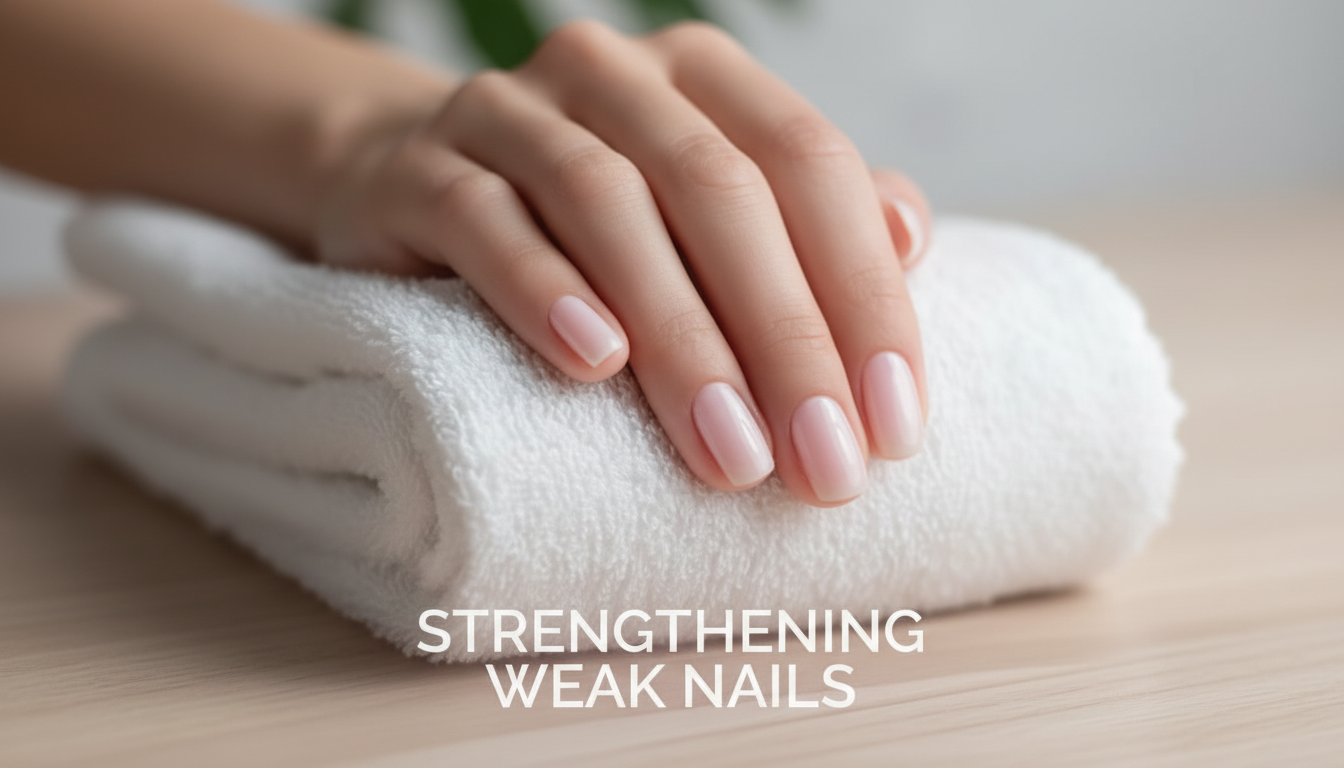
If you like having a structured checklist to follow each day, Strengthening Weak Nails Guide (Digital eBook) is designed around simple, repeatable steps you can stick with while the damaged portion grows out.
Home-friendly strengthening habits that actually help
For practical nail-care basics and what to avoid, the American Academy of Dermatology has a helpful overview here: Nail care basics (AAD).
Nutrition and lifestyle support for stronger growth
- Prioritize protein: Nails are keratin-based; consistent protein intake supports steady growth.
- Consider iron and zinc status: Brittleness can be associated with deficiencies. If fatigue or hair shedding is also present, ask a clinician whether testing makes sense.
- Biotin: Some studies suggest it may help brittle nails, but it isn’t right for everyone and can interfere with certain lab tests. Review the NIH fact sheet before supplementing: Biotin (NIH Office of Dietary Supplements).
- Hydration and barrier care: Drinking enough water helps overall skin comfort, but topical moisture (oil + cream) is often the bigger factor for nail flexibility.
- Sleep and stress: Chronic stress can increase picking/biting habits and make routines harder to maintain.
Mistakes that slow repair (and what to do instead)
When it’s time to get a medical opinion
For a broader overview of nail changes that may signal an underlying issue, see: Mayo Clinic: Nails—symptoms and causes.
A guided plan for growth and repair
FAQ
How long does it take to strengthen weak nails?
Many people notice less peeling and fewer breaks within 2–4 weeks once protection and moisturizing are consistent. Full replacement of the nail plate takes months, so the most dramatic improvement shows up as the healthier nail grows out.
Do nail strengtheners work or do they make nails more brittle?
Some strengtheners help reduce surface wear and peeling, especially when used as directed under polish. Very rigid hardeners or overuse can increase snapping, so pair strengthening layers with daily oil/cream for flexibility.
What’s the best natural daily routine for weak, peeling nails?
Keep nails short, file gently with a fine-grit file, apply cuticle oil and hand cream daily (especially after washing), and wear gloves for wet work. Add a protective base coat, avoid picking/biting, and limit harsh remover exposure.
Recommended for you









Leave a comment