
Broad spectrum sunscreen can be one of the simplest daily habits for preventing visible sun damage, uneven tone, and premature skin aging—but the label can be confusing. “SPF” is often treated like a single score for protection, yet it mainly reflects one part of the sun’s UV radiation. The goal is to make coverage consistent (not complicated), whether you’re heading to work, running errands, or spending a full day outdoors.
Below is a clear breakdown of what “broad spectrum” really means, how to read a sunscreen label quickly, and an everyday checklist you can use to make sun protection feel automatic.
“Broad spectrum” indicates a sunscreen is formulated to protect against both UVB (the rays most associated with sunburn) and UVA (the rays strongly linked to visible aging and long-term skin changes). That distinction matters because the SPF number on its own primarily reflects UVB protection, while “broad spectrum” signals meaningful UVA coverage as well.
UVA exposure is easy to underestimate because it’s present year-round, can be significant even on cloudy days, and can penetrate window glass—so it can still affect skin during commutes, by-office-window workdays, and time spent near bright indoor windows.
One more key point: broad spectrum does not mean “all-day.” Real-world protection still depends on using enough product and reapplying when your day includes sun, sweat, swimming, or towel-drying. For more background on how sunscreen is regulated and labeled, see the U.S. Food & Drug Administration sunscreen Q&A.
Both UVA and UVB contribute to uneven pigmentation and visible skin changes over time, so balanced coverage supports more consistent results from the rest of a skincare routine. The simplest way to think about it: UVB is the “burning” risk that spikes with intense sun, while UVA is the “aging” risk that is steadier across days and seasons.
| Type | Common effect | Where it shows up | What to look for on a label |
|---|---|---|---|
| UVB | Sunburn | Stronger in peak sun hours; varies by season | SPF number (higher SPF = more UVB protection) |
| UVA | Tanning and visible aging | Present year-round; can pass through window glass | “Broad spectrum” (or UVA rating system where applicable) |
If you want a quick refresher on best practices like water resistance and reapplication timing, the American Academy of Dermatology Association sunscreen FAQs is a solid reference.
Consistency is what makes sunscreen feel like it “works.” The checklist below turns common miss-steps (like skipping ears or forgetting a midday top-up) into simple checkpoints you can repeat without thinking.
| Checkpoint | What to do | When | Done |
|---|---|---|---|
| Label | Confirm “Broad Spectrum” + SPF level | Before buying / first use | ☐ |
| Amount | Apply enough to fully cover face + neck + ears | Every morning | ☐ |
| High-risk spots | Ears, hairline, around eyes (carefully), hands | Every application | ☐ |
| Reapply | Reapply based on sun exposure and activity | Every 2 hours outdoors (or after sweating/swimming) | ☐ |
| Water resistance | Use water-resistant formula when needed | Beach, workouts, humid days | ☐ |
| Sun-smart extras | Hat, sunglasses, shade planning | When UV index is high | ☐ |
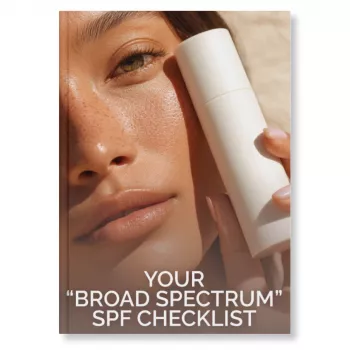
For a ready-to-print version you can keep by the sink or in a travel pouch, see the Broad Spectrum SPF Printable Checklist.
For indoor/workday routines, urgency depends on exposure. If you’re seated far from windows, reapplication may be less pressing. If you’re driving often, sitting next to a bright window, or taking a midday walk outside, a quick top-up can be worthwhile. The CDC sun safety guidance is also helpful for planning protection around high-exposure days.
If visible aging prevention is part of your routine goals, pairing sunscreen consistency with other protective habits can be helpful. For more daily habit prompts, see The Checklist to Stop Fine Lines Before They Start.
No. Broad spectrum means the product is formulated to protect against both UVA and UVB, but it doesn’t block them completely; real protection depends on the SPF level, how much you apply, and whether you reapply as needed.
Not necessarily. SPF primarily reflects UVB protection, so you still need to look for “Broad Spectrum” on the label (or an applicable UVA rating system) to confirm UVA coverage.
It depends on exposure. If you spend time near windows or drive frequently, broad spectrum sunscreen can be helpful because UVA can pass through glass; if you’re far from windows most of the day, it may be less urgent.










Leave a comment